Osher Electric Mobility & Battery Systems
Developing battery modules and packs for electric mobility and stationary applications, with battery management, thermal and electrical integration.
Manufacturing mandate
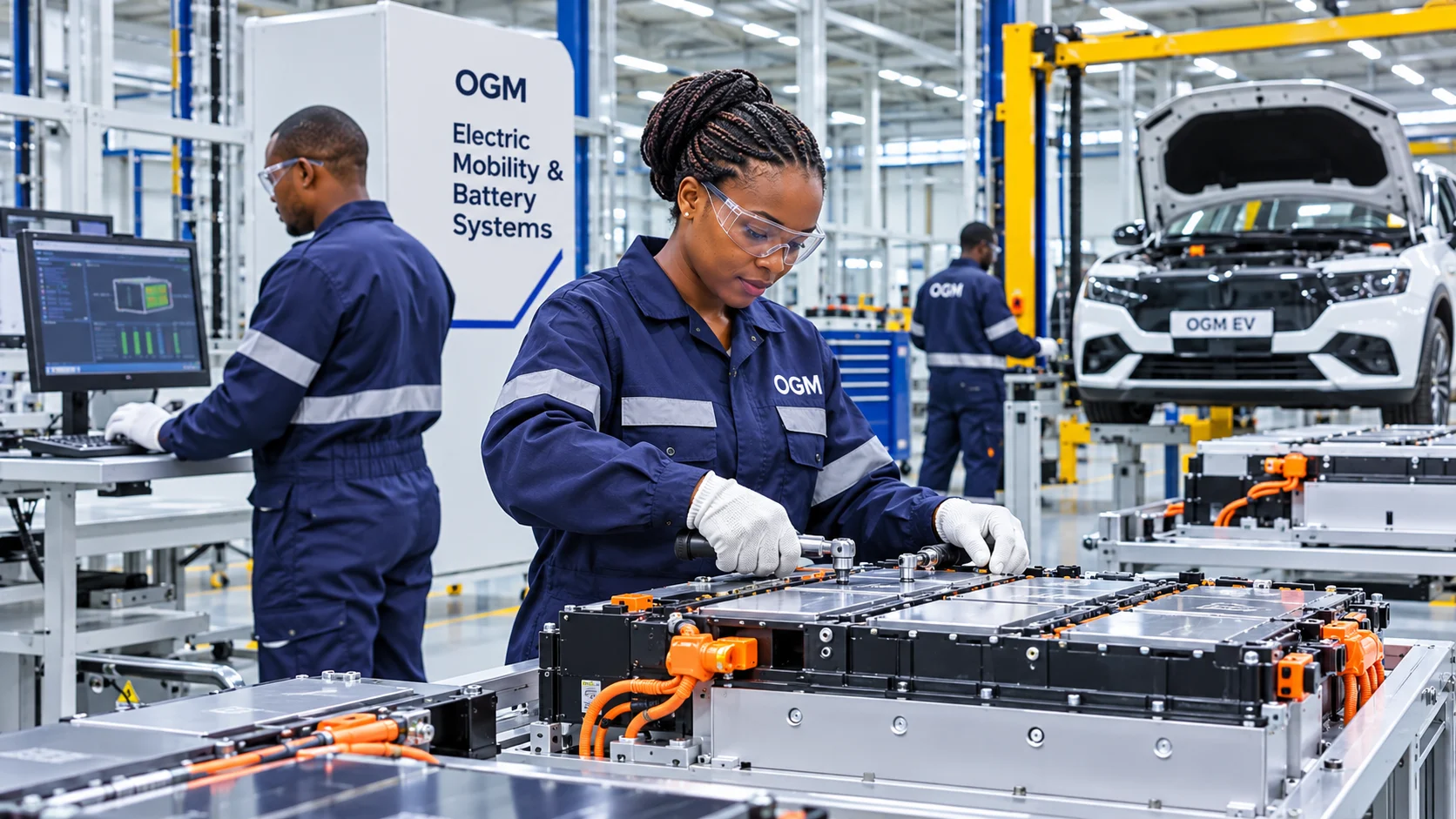
Osher Electric Mobility & Battery Systems (Pty) Ltd is part of Osher Global Manufacturers (OGM). The company is developing local capacity to engineer, assemble, integrate and validate battery modules and packs for electric vehicles, industrial mobility equipment and selected stationary applications.
Planning basis. 1 GWh per year of initial nameplate battery-module and pack assembly capacity, subject to cell-format selection and final OEM engineering.
Planned products and capabilities
- Battery modules and packs for electric vehicles, industrial mobility and selected stationary applications
- Pack enclosures, thermal management and battery-management system integration
- High-voltage protection, traceability, end-of-line electrical testing and product validation
Manufacturing and qualification
The initial operating model uses qualified purchased cells and selected imported components, with progressive localisation of enclosures, harnesses, thermal interfaces and electronics. Qualification will address electrical isolation, thermal propagation, mechanical integrity, transport and the vehicle manufacturer’s requirements.
Vision and mission
Vision
Advancing accessible electric mobility through reliable African battery technology.
Mission
Providing safe, efficient battery systems that power mobility and industrial development.
Location and development
Coega, Eastern Cape, South Africa, is the target manufacturing location. The company is in pre-operational industrial development and capital mobilisation.
Site commitments depend on utilities, environmental and safety approvals, OEM requirements and financing. Commercial production follows equipment commissioning, product qualification and customer validation.
Markets and technology partners
Commercial vehicle assemblers, bus and fleet electrification programmes, two- and three-wheeler manufacturers, industrial vehicle and material-handling equipment suppliers, and selected stationary applications.
Partnership focus
The company seeks vehicle manufacturers, cell producers, controls and thermal-system specialists, certification partners and fleet operators for validated product platforms, technology transfer and supply agreements.
Connections across the Group
These potential relationships depend on technical qualification, market demand and commercial agreements.
- Lithium cells Build modules and packs around qualified cell formats and chemistries.
- Energy storage Qualify stationary packs for suitable storage integration programmes.
- Power electronics Align conversion and power-control requirements with battery system design.
- Photovoltaics Evaluate solar-linked charging and distributed energy for fleet depots.
- Smart lighting Explore common controls and selected off-grid applications.
- Secure technologies Evaluate authenticated gateways, telemetry and embedded security for battery-management systems.
- Semiconductors Qualify semiconductor and power devices against OEM requirements.
Capital programme
R900m in planned industrial capital. The funding requirement covers facility development, production readiness and start-up.
Principal uses of capital
Production facilities, automated and semi-automated module and pack lines, electrical and thermal testing, battery-management engineering, workforce development and initial cell inventory.
Investment participation
The proposed ownership split at full subscription of the initial issue is 49% OGM and 51% investor or OEM participation. The framework provides for an initial issue of up to 70% of the planned share allocation and a 30% unissued reserve. Actual participation is subject to approvals, allotments and negotiated agreements.
Funding may combine negotiated equity, development finance, equipment finance and qualified OEM participation. Capital deployment follows engineering, commercial qualification and financing milestones.
Group investment frameworkDiscuss this industrial programme
Connect with OGM on technology cooperation, industrial development and institutional investment.